
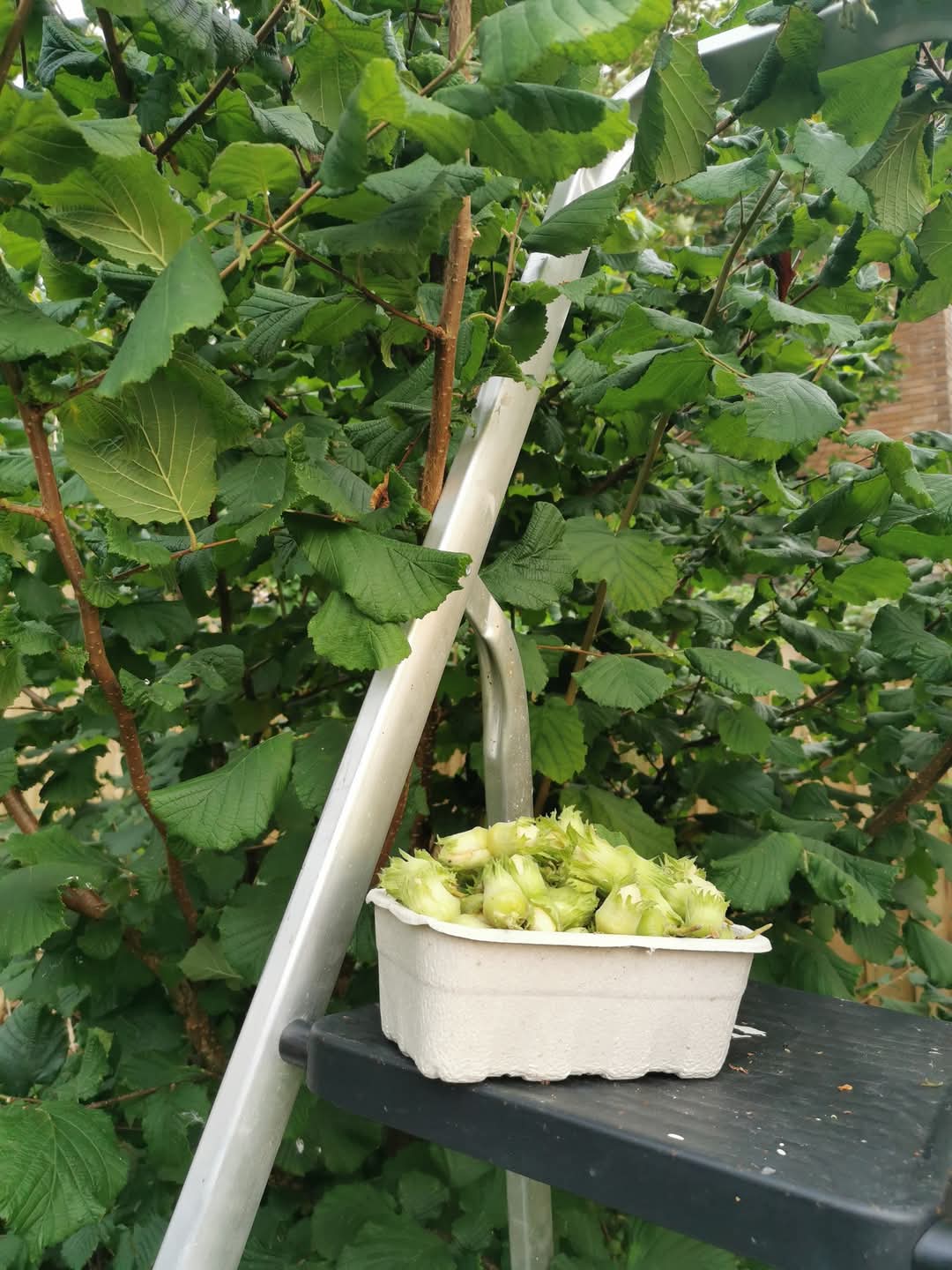
This autumn I’ve been harvesting hazelnuts from a tree kindly given to me by fellow Tir Pontypridd member Ken Moon. 2025 has provided a combination of prolonged hot weather with a decent amount of rainfall (at least compared to many other parts of the UK). Pontypridd has had a glut of fruits such as cherry, plum, currants, raspberries, gooseberries and apples.
But the real time of gluts and abundance is in the late summer and early autumn. People are sharing their extra fruit and veg with neighbours. They are freezing fruit and sharing tips on how to jam, pickle, and ferment the food that they have grown and foraged so that it doesn’t go to waste. When you have put work and effort into picking or growing food, you hate to see it going to waste. This food is valued by the community in a way that mass produced commercial crops aren’t because of the love and care that people have put into the cultivation or harvesting, which is about more than just a financial commodity.
I am the manager of Pete’s Shop, a community benefit society wholefoods and homebrew shop. This time of year in particular a lot of customers come in for brewing equipment to make country wines from fruit garden and allotment trees and foraged berries. They love to talk about their method and compare notes on how their brews turned out. Some customers bring in excess fruit and veg. We allow customers to take this produce but ask that they make a cash donation to the local foodbank in return. We have had chutney making
workshops and sometimes make our own jams and preserves from local fruit for sale in the shop.
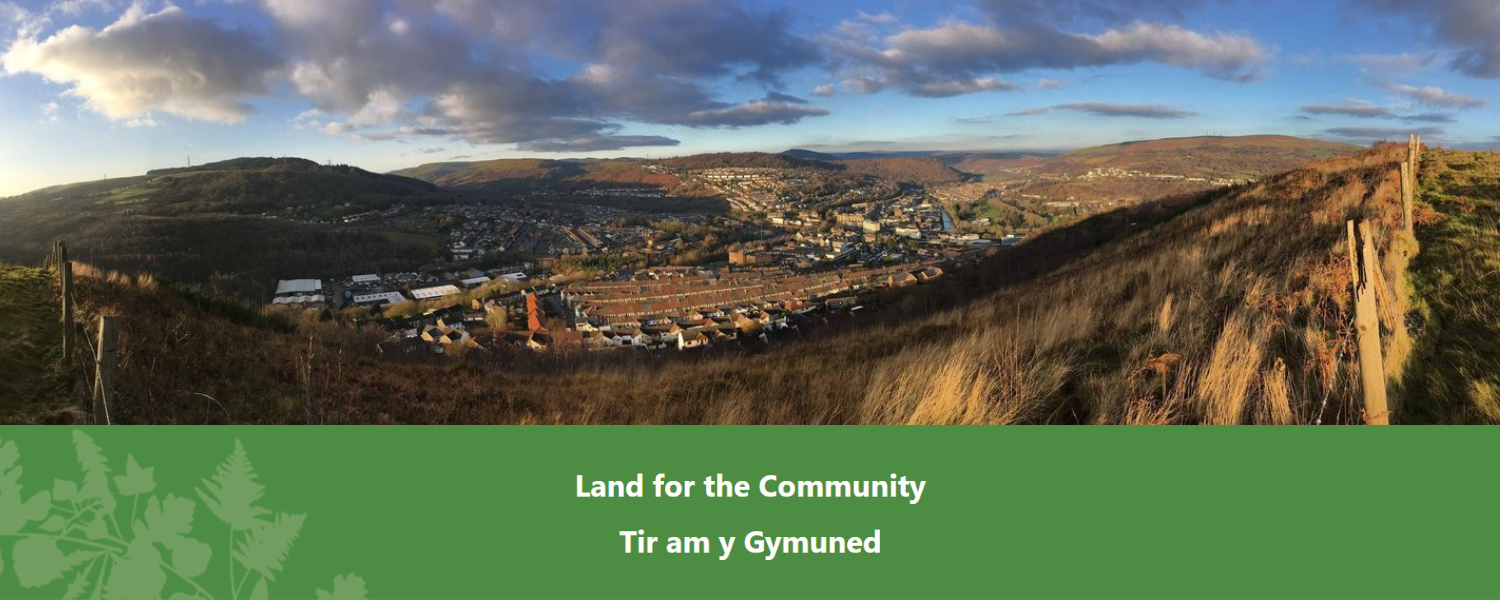
Pontypridd is a semi-rural area. Compared to much of rural and semi rural Wales there is not a strong farming culture here due to the advent of industrialisation which changed the ancient landscape away from natural habitats and farmland and to heavy industry. Collieries, pits and steelworks transformed the landscape along with urbanisation to build houses for all of the workers moving to the area. Many of the neighbourhoods in Pontypridd
were built very fast to accommodate the influx of workers coming to the area from the UK and overseas to work in the pits and steelworks. These basic, functional miner’s dwellings are primarily small terraced houses usually with small concrete yards which don’t offer much opportunity for horticulture and growing food.
Once the pits closed and most of the heavy industry jobs moved away, the silver lining of the cloud of the post-industrial landscape is that much of the hillsides around Ponty have been allowed to naturally regenerate giving rise to forests and other biodiverse habitats.
Over the years it has become increasingly evident that many of these hills are rich in nature, contradicting the previously held belief that brownfiled areas are ecologically poor. In fact, many of the old colliery sites near Ponty provide very unique habitats which provide homes to invertebrates not found elsewhere. A lot of this land is accessible to the public for hiking and foraging. However, public access does still remain an ongoing issue on some of the privately owned pieces of land and there are still some small farms around Pontypridd, mainly producing lamb, beef and milk.
Most people living in and around Pontypridd are not farmers and do not come from farming backgrounds. But these informal networks of sharing and knowledge about growing, foraging and preserving have been passed down from our ancestors who would have depended on them for their survival before the age of supermarkets, and free international trade. It’s important to acknowledge how these local networks help us feel more connected to nature, teach us skills and helps to build community, but these skills and networks could also be as vital for our future survival as they were for our ancestors. We face an uncertain future. Climate change makes our crops and food supplies more unpredictable, exisitng international trade agreements are more fragile than they used to be and pandemics and wars affecting international trade routes means that we can’t always rely on foods to be there on the shelf in the supermarket. We may have to depend on more localised food cultivation, preservation and knowledge in the future. Access to land in order to grow and forage food is central to this.
Caspar Harris